
A Practical Guide Based on Ore Characteristics & Production Goals
When designing a crushing process, the key question is not how many crushing stages you need, but what each stage must achieve.
Different ores, feed sizes, and final product requirements determine how crushing duties should be distributed across primary, secondary, and tertiary stages.
This guide focuses on real selection logic, not textbook definitions.
1. Start with Feed Size & Mining Conditions (Not the Crusher)
Before selecting any equipment, engineers should evaluate:
Maximum feed size from blasting
Ore hardness and abrasiveness
Moisture and clay content
Required plant capacity (TPH)
Final product size and shape requirements
👉 These factors decide how much reduction must happen at each stage, which directly impacts crusher choice and wear cost.
2. Primary Crushing: Handle Oversize Feed with Stability
Primary crushing equipment must prioritize:
Ability to accept large feed
Stable operation under uneven feeding
Low risk of blockage or downtime
Practical equipment choices:
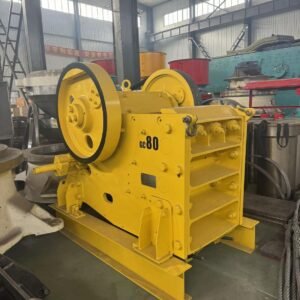
Jaw crushers → Most common choice for hard and abrasive ores
Gyratory crushers → Used in high-capacity mines with continuous feeding
Selection tips:
If feed size is inconsistent → jaw crusher is safer
If capacity > 1000 TPH and feed is uniform → gyratory crusher becomes economical
⚠️ Common mistake:
Choosing a smaller primary crusher to save initial cost often leads to:
Frequent liner replacement
Reduced downstream efficiency
Higher total operating cost
3. Secondary Crushing: Balance Reduction Ratio & Wear Cost
The secondary stage is where energy efficiency and wear cost start to matter most.
Typical choices:
Cone crushers → For hard, abrasive materials
Impact crushers → For softer or less abrasive stone
How to decide:
Hard rock + high abrasiveness → cone crusher
Medium hardness + shape requirement → impact crusher
For mining applications, cone crushers dominate secondary crushing due to:
Better liner life
Stable product grading
Lower long-term wear cost
👉 This stage often determines annual wear parts budget.
4. Tertiary Crushing: Control Final Size & Shape
Tertiary crushing is selected only if final product requirements demand it.
Common tertiary equipment:
Short-head cone crushers → Precise size control
VSI crushers → Excellent particle shape for aggregates
Use tertiary crushing when:
Final size < 10–20 mm is required
Shape is critical for downstream processing
Grinding load needs to be reduced
⚠️ Not every plant needs tertiary crushing.
Adding this stage without clear demand increases:
Power consumption
Wear parts usage
Maintenance workload
5. Typical Equipment Selection Matrix
| Crushing Stage | Ore Type | Recommended Equipment |
|---|---|---|
| Primary | Hard / abrasive | Jaw Crusher |
| Secondary | Hard rock | Cone Crusher |
| Tertiary | Fine size control | Short-head Cone / VSI |

6. How Proper Selection Reduces Wear Parts Cost
Correct stage allocation:
Reduces overloading of secondary crushers
Improves liner utilization rate
Extends wear parts service life
This is why many mines focus on optimizing crushing stages rather than upgrading a single crusher.
Final Thought
Effective crushing equipment selection is about process balance, not individual machines.
A well-designed crushing circuit always delivers:
Lower operating cost
Longer wear parts life
More stable plant performance