
In large-scale limestone crushing projects, increasing capacity is rarely just about choosing bigger machines. A high-capacity limestone crushing plant requires a well-balanced equipment configuration that considers feed size, material behavior, operating stability, and long-term maintenance cost.
Before selecting crushers for a high-output limestone production line, the following six questions should be carefully evaluated.
1. What Is the Maximum Feed Size of the Limestone?
Feed size directly determines the selection of primary crushing equipment.
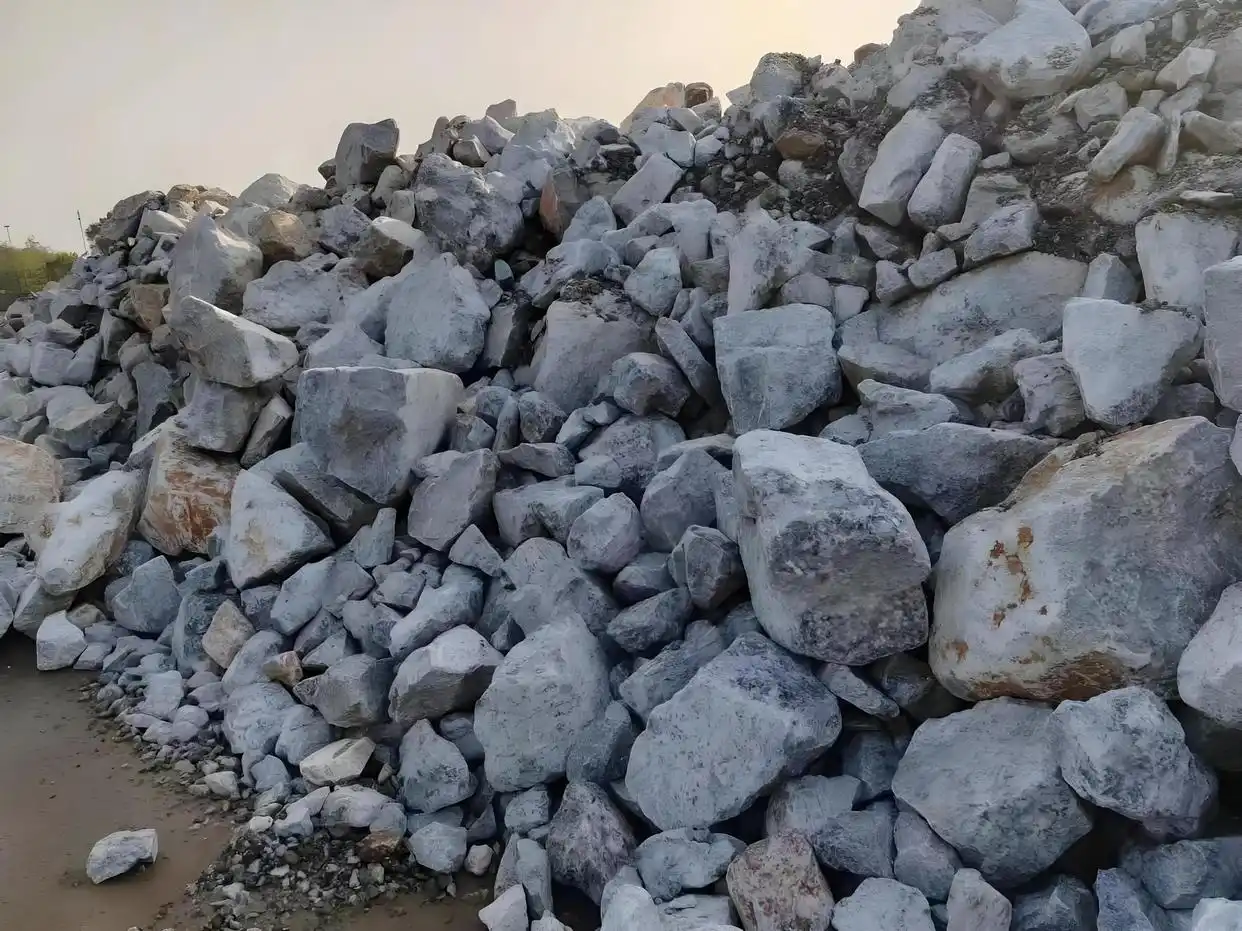
In high-capacity applications, limestone is often blasted into large blocks. If the maximum feed size exceeds 600 mm or even 800 mm, a heavy-duty jaw crusher becomes essential for primary crushing. Choosing an undersized primary crusher will lead to reduced throughput, frequent blockages, and increased wear.
A properly selected jaw crusher ensures:
Stable feed flow
Reduced stress on downstream crushers
Consistent production at high capacity

2. Is the Limestone Clean or Mixed with Clay and Moisture?
Material condition is often underestimated in equipment selection.
While limestone is relatively soft, clay content and moisture can significantly affect crusher performance. Sticky or wet limestone increases the risk of clogging, especially in fine crushing stages.
For high-capacity plants:
Impact crushers perform well with clean, dry limestone
Cone crushers offer better stability when material conditions fluctuate
Pre-screening may be necessary if clay content is high
Ignoring material conditions can reduce actual output far below the designed capacity.

3. How Important Is Final Product Shape?
In high-output limestone crushing, product shape matters as much as quantity—especially for concrete and asphalt aggregates.
Impact crushers provide excellent particle shape and higher cubic content
Cone crushers offer higher capacity and better wear resistance, but less shaping ability
VSI crushers are often added for final shaping or sand production
The ideal solution is often a multi-stage configuration that balances capacity and aggregate quality rather than relying on a single crusher.
4. Can the Crushing Line Maintain Continuous Feeding?
High capacity requires continuous and stable feeding.
Even the most powerful crusher cannot reach its rated output without consistent material flow. Improper feeder selection or unstable feeding will result in:
Fluctuating load
Higher energy consumption
Premature wear of liners and bearings
Heavy-duty vibrating feeders with adjustable speed are recommended for high-capacity limestone plants to maintain uniform feed conditions.
5. Are Wear Parts Suitable for Long-Term High Output?
In high-capacity operations, wear parts are not just consumables—they directly impact uptime and operating cost.
Although limestone is not extremely abrasive, continuous large-scale crushing still causes significant wear on:
Blow bars
Cone crusher liners
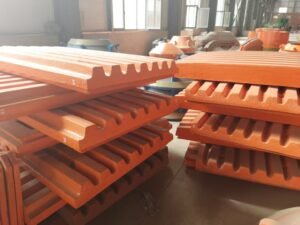
Selecting high-quality manganese steel or optimized alloy wear parts can dramatically extend service life and reduce shutdown frequency. For many operators, OEM-alternative wear parts offer a better balance between cost and durability.
6. Is the System Designed for Easy Maintenance and Expansion?
A high-capacity limestone crushing plant should not only meet current production targets but also allow for future adjustments.
Key considerations include:
Hydraulic systems for fast liner replacement
Enough space for maintenance operations
Compatibility with additional screening or crushing stages
Plants designed without maintenance access or expansion flexibility often suffer from long downtime and higher operating costs over time.
Conclusion
High-capacity limestone crushing is not achieved by a single machine but by a well-matched system.
By carefully evaluating feed size, material conditions, product requirements, feeding stability, wear part selection, and maintenance design, operators can build a limestone crushing plant that delivers consistent output, reliable operation, and long-term cost efficiency.
At Metalore, we support limestone crushing projects with equipment solutions and OEM-alternative wear parts designed for demanding, high-output applications.