When you’re evaluating a jaw crusher—whether for a new crushing line or as a replacement unit—it’s important to understand the major components and how each part affects performance, durability, and maintenance. A jaw crusher may look simple from the outside, but internally it relies on multiple coordinated components working under high load and continuous operation.
This practical breakdown will help buyers, operators, and maintenance teams clearly understand what makes a jaw crusher function and what to pay attention to when selecting or servicing one.
1. Feed Hopper
The feed hopper guides raw material into the crushing chamber.
Why it matters:
Ensures even feeding
Prevents large rocks from hitting the chamber aggressively
Reduces wear on the crusher opening
A poorly designed hopper can cause bridging, inconsistent feed, or premature wear.
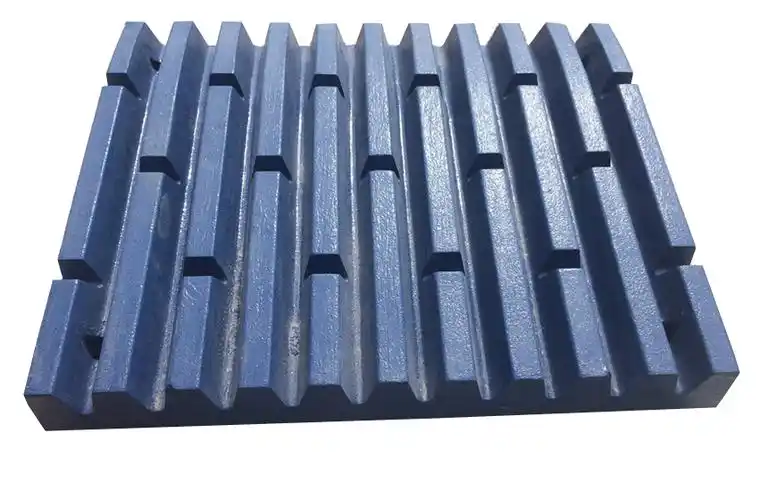
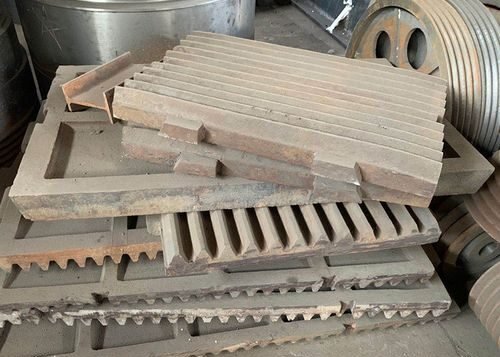
2. Fixed Jaw Plate
This is the stationary jaw that forms one side of the crushing chamber.
Key role:
Works together with the movable jaw to compress material
Affects crushing angle and output size
Look for high-manganese steel or alloys suited to your material hardness.
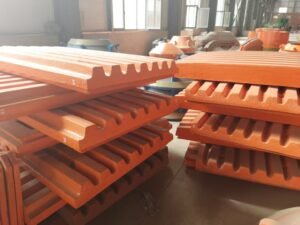
3. Movable Jaw Plate
The moving jaw plate performs the actual crushing motion.
Why it’s critical:
Directly responsible for compressing and fracturing the rock
Wears quickly due to constant impact and friction
High-quality jaw plates improve throughput and extend replacement intervals.
4. Pitman Assembly
The pitman is the central moving component driven by the eccentric shaft.
Functions:
Transfers motion to the movable jaw
Absorbs stress from crushing forces
Maintains structural stability
The pitman must be rigid yet capable of handling repetitive stress cycles.
5. Eccentric Shaft
Often considered the heart of a jaw crusher.
Purpose:
Creates the up-and-down motion of the movable jaw
Determines stroke length and crushing force
A well-machined eccentric shaft ensures smoother operation and reduces vibration.
6. Bearings
Bearings support the eccentric shaft and allow smooth rotation under heavy load.
Why they matter:
Poor-quality bearings lead to heat build-up and premature failure
Proper lubrication is essential
Directly impacts uptime
Buyers should pay close attention to bearing brand and maintenance accessibility.
7. Toggle Plate
A simple-looking but essential mechanical safety component.
Functions:
Acts as a mechanical fuse: breaks when uncrushable material enters
Maintains proper alignment of the pitman
Helps control jaw movement
If a crusher lacks a reliable toggle plate system, expect more downtime.
8. Toggle Seat
Holds the toggle plate in the correct position.
Importance:
Ensures proper angle and stroke
Affects the crusher’s ability to handle load variations
Worn toggle seats can reduce crushing efficiency.
9. Cheek Plates (Side Liners)
Located on both sides of the crushing chamber.
Role:
Protect the crusher frame from abrasion
Preserve chamber geometry
Reduce structural wear
Cheek plates are relatively inexpensive, but ignoring them can damage the frame.
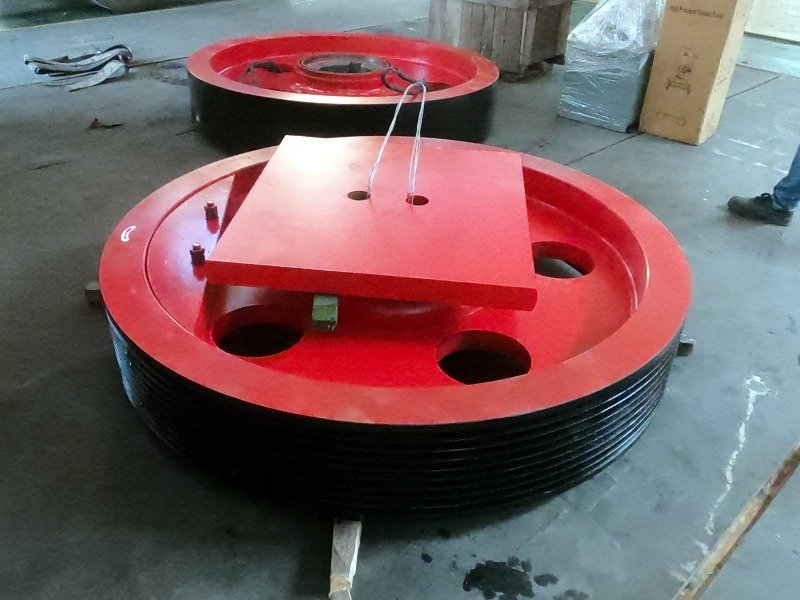
10. Flywheels
Typically located on both sides of the eccentric shaft.
Purpose:
Store kinetic energy
Provide consistent crushing motion
Reduce power fluctuations
A jaw crusher with properly balanced flywheels runs smoother and consumes less energy.
11. Tension Rods and Springs
These components help maintain the correct position of the toggle plate.
Why they’re important:
Prevent the toggle from falling out of place
Regulate movement to avoid excessive vibration
Loose or weak tension components can lead to erratic operation.
12. Discharge Opening / CSS Adjustment System
Determines the final output size.
Functions:
Controls the closed-side setting (CSS)
Adjusts product gradation
Allows for quick adaptations to production requirements
Hydraulic adjustment systems save time and reduce manual labor.
What Buyers Should Pay Attention To
When sourcing a jaw crusher, these component-related factors are crucial:
Jaw plate material and lifespan (affects long-term cost per ton)
Bearing quality and accessibility (affects uptime)
Eccentric shaft strength and machining accuracy
Ease of adjusting CSS
Frame strength and weld quality
Availability of spare parts
A jaw crusher is only as reliable as its weakest component. Understanding each part helps ensure that the machine you choose matches your production demands and provides long-term value.