When it comes to jaw crushers, the material of the jaw plates plays a bigger role than most people realize. The right composition determines how long the plates last, how well the crusher performs, and how much downtime you can avoid. For operators working in mining, quarrying, or aggregate production, understanding the material composition of jaw plates is essential for choosing the right replacement parts.
1. High Manganese Steel (Mn13, Mn13Cr2, Mn18, Mn18Cr2)
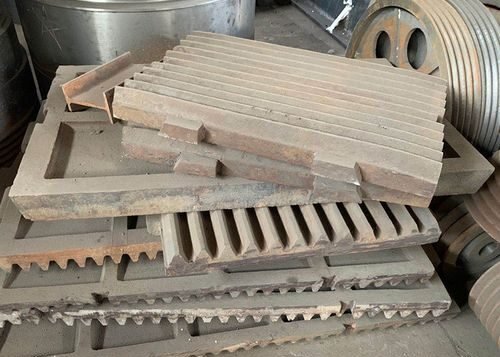
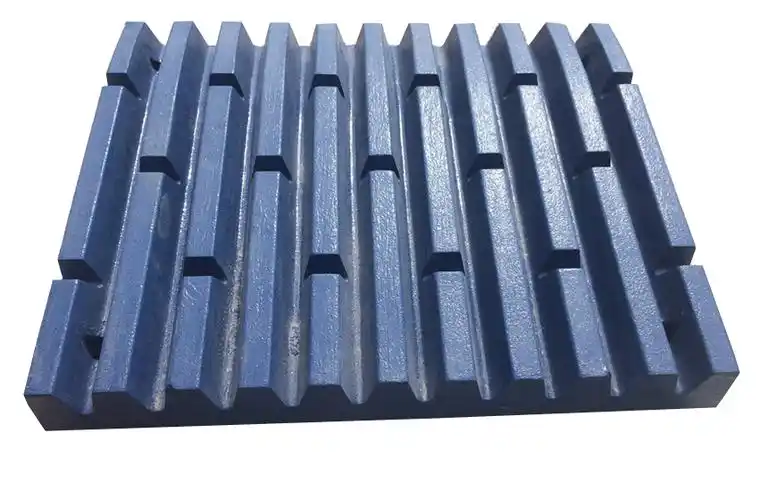
The most common material for jaw crusher plates is high manganese steel. This alloy has a unique work-hardening ability — the harder the material hits the plate, the stronger and more wear-resistant it becomes.
Key advantages:
Excellent toughness and impact resistance
Work-hardening surface increases service life
Suitable for a wide range of stone hardness
Typical composition:
12–22% Manganese
1.5–2.2% Chromium
Balance: Iron + trace elements
2. Alloy Steel (High Chrome, Medium Carbon)
For very abrasive stone, alloy steel plates may be used. They include higher levels of chromium or other alloying elements to enhance wear resistance.
Features:
Better wear performance in highly abrasive environments
More stable hardness than manganese steel
Not as tough for continuous impact crushing
These are often preferred in industries where the feed material is extremely hard and abrasive.
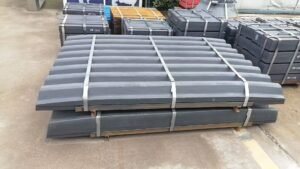
3. TIC Insert Jaw Plates (Titanium Carbide Inserts)
In the last few years, TIC-insert jaw plates have become popular because they drastically extend service life. Titanium carbide rods are embedded into manganese steel, creating a hybrid structure.
Benefits:
2–4 times longer life compared to standard Mn18 plates
Reduced downtime and maintenance costs
Ideal for hard rock crushing and high-volume operations
4. Why Material Composition Matters
Each material behaves differently under strong impact, high pressure, and continuous abrasion. Choosing the wrong composition can lead to:
Early breakage
Uneven wear
Reduced output
More frequent changeouts
On the other hand, the correct plate material provides stable performance and lower operating costs.
5. How to Choose the Right Jaw Plate Material
Consider the following factors when selecting your jaw plates:
Hardness of the stone (soft, medium, hard, or extremely abrasive)
Crusher model and speed
Feed size and reduction ratio
Required output and production volume
For most applications, Mn18Cr2 is a reliable and cost-effective option. For very abrasive conditions, TIC inserts usually offer the best results.
6. About Our Replacement Jaw Plates
At Metalore, we supply high-quality replacement jaw plates compatible with major brands such as Metso, Sandvik, Terex, and others. Our plates are available in:
Mn13, Mn18, Mn22
Cr-alloy steel
TIC-insert designs for extended life
All parts follow strict chemical composition and hardness control to ensure stable performance.